Shop by
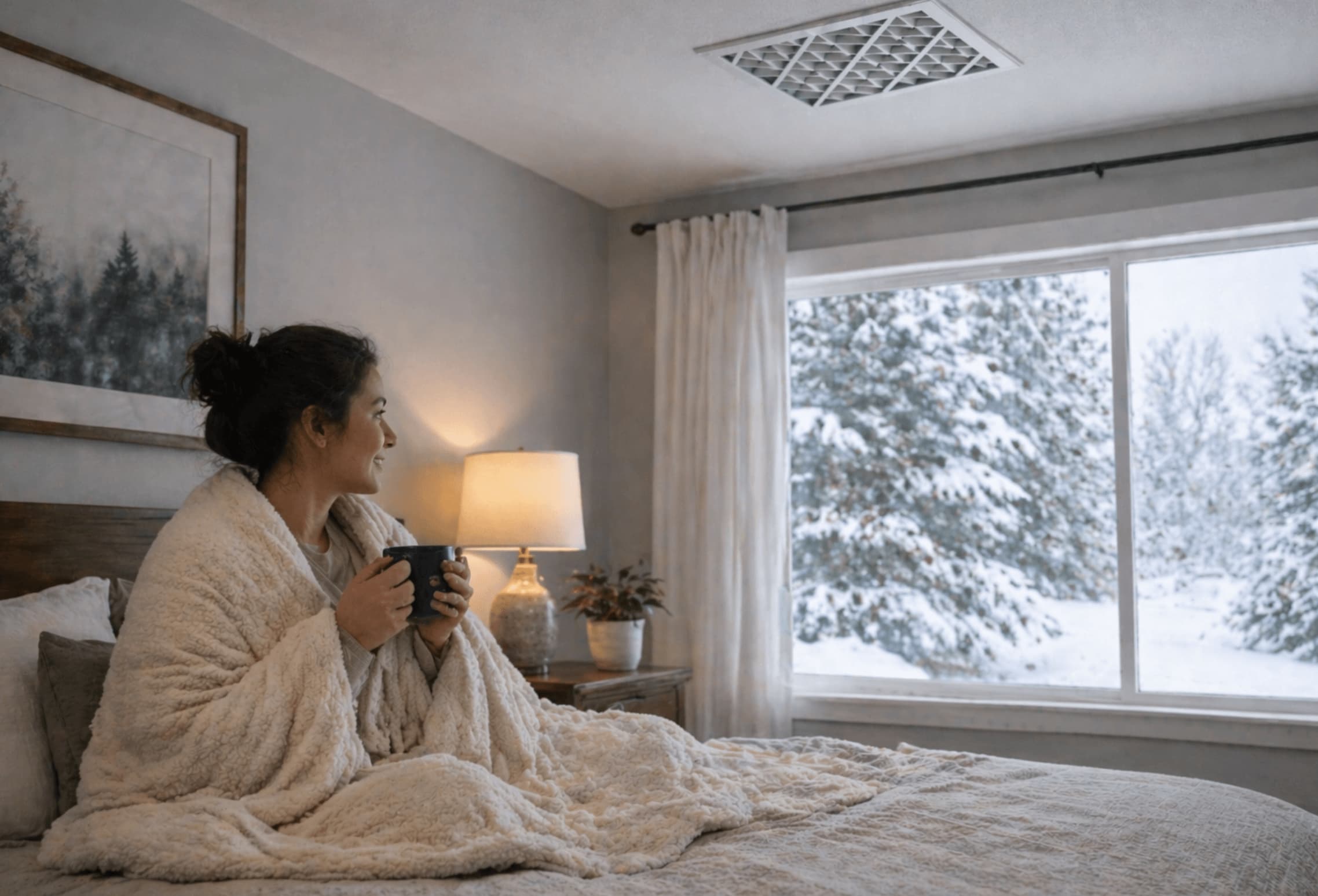
Your thermostat says 68. The furnace has been grinding away since before the kids woke up. The bedroom upstairs still feels like 60, and your lips are already chapped from the dry air.
When outdoor temperatures drop below freezing for more than a day or two, your heating system works harder than it does at any other point in the year. That extra workload turns small airflow problems you'd never notice in October into expensive comfort problems in January. Most of them trace back to one thing most homeowners never think about: what's happening at the air filter.
We'll walk you through what to check first, what can wait, and what deserves a call to a licensed pro. Most of it costs less than a pizza and takes about as long to handle.
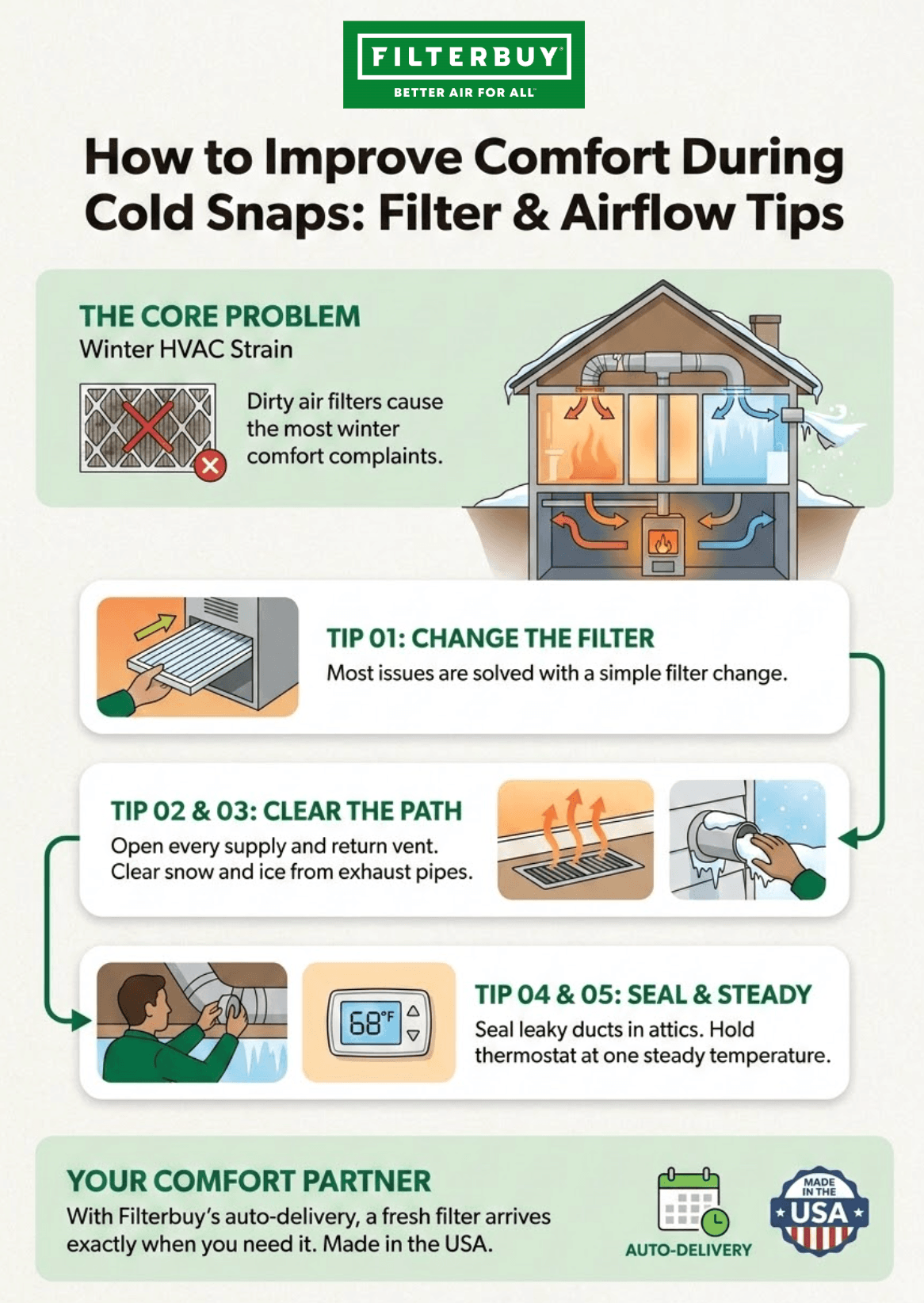
Five moves, in order, fix the vast majority of winter comfort complaints before you ever pick up the phone. Replace a dirty air filter. Open every supply and return vent. Clear snow and ice from the outside exhaust pipe. Seal duct leaks in your attic or crawlspace. Hold the thermostat at one steady temperature instead of cranking it up and down.
Start with the filter. If you hold it up to a light and can't see through it, you've probably found the whole problem.
• A dirty air filter causes more winter comfort complaints than anything else our technicians see in the field. Check yours tonight.
• During a cold snap, your HVAC runs close to non-stop. Shorten your filter-change interval from 60 to 90 days down to 30 days until the weather breaks.
• Closing vents in unused rooms raises static pressure in your ducts and trips safety shutoffs. It doesn't save energy.
• Heat pumps lose efficiency below roughly 35 to 40°F. Cranking the thermostat kicks on expensive backup electric heat, not more warmth.
• Ducts running through attics, crawlspaces, or garages can lose 20 to 30 percent of the heated air you paid for. Sealing them is one of the best winter investments in your home.
• Dry winter air feels colder than humid air at the same temperature. Keeping indoor humidity between 30 and 40 percent makes 68°F feel like 70°F without touching the thermostat.
• If your CO detector goes off or you smell anything burning, shut the system down and call a licensed technician. Safety first, every time.
Work these in order. The first three handle most complaints before you need to spend a dollar.
A clogged filter chokes off the airflow your furnace needs to run safely. When return air can't move, the heat exchanger overheats, the safety switch cuts power, and the burner shuts down before the house hits temperature. A few minutes later, it starts again. Your home never quite warms up, but your equipment wears out twice as fast.
Pull the filter. Hold it up to a bright light. If light doesn't pass through, replace it. MERV 8 to MERV 11 handles most homes well. High enough to catch dust and pet dander, low enough to keep airflow strong. During a cold snap, check it monthly instead of every 60 to 90 days. If your system is already short-cycling, here's a fuller look at why HVAC systems short-cycle in cold weather.
Walk the house. Check every room. Furniture gets pushed around over the holidays, a rug lands on top of a floor register, a curtain drapes in front of a return. Any one of those starves the system of the air it was engineered to move.
And please, open the vents in the guest room. Closing them in unused rooms is a myth that won't die. It doesn't save energy. It raises pressure inside your ductwork, forces the blower to work harder, and triggers the same safety shutoff a dirty filter would. If you want to redirect heat, close the interior doors to rooms you don't use and leave the vents alone.
Your furnace vents combustion gases through a flue or PVC pipe that exits the house. When that pipe gets buried by a snow drift, glazed over with ice, or blocked by a bird nest, combustion gases back up inside the system and the safety lockout kills the burner.
Walk the perimeter after every heavy snowfall. Find the flue cap or white PVC pipe, and clear a two-foot circle around the opening. If your furnace has a separate fresh-air intake pipe, clear that too. Five minutes outside saves you a weekend service call.
Safety Notice: If you smell burning, see soot around a vent, or your carbon monoxide alarm sounds, stop troubleshooting. Turn the system off and call a licensed HVAC technician. A blocked flue or a cracked heat exchanger can leak CO into your home, and CO is odorless and colorless. This is not a DIY situation.
Your ductwork probably runs through an attic, a crawlspace, or a garage. Those parts of the house aren't heated. According to the U.S. Department of Energy, the average home loses 20 to 30 percent of the heated air it pays for through leaky ductwork. On a 15°F night, that loss is brutal.
Fix it with mastic sealant or UL-181 rated foil tape at every accessible joint. Do not use cloth duct tape. The name is misleading — cloth duct tape is the one tape not rated for duct use, and it fails within a year. If your ducts are buried in walls or hard to reach, a professional duct-sealing service pays for itself quickly during cold weather.
When the house feels cold, the first instinct is to bump the thermostat from 68 to 75. That doesn't heat the house faster. On a heat pump, it triggers auxiliary electric resistance heat, which costs two to three times more per hour than normal heating. On a furnace, it just runs the same burner longer, and the burner can only put out the heat it's rated for.
Pick a comfortable setting. Around 68°F works for most of the day. Leave it there. If you have a smart thermostat, a small overnight setback of 2 to 4 degrees is fine. Bigger swings cost more than they save when it's cold outside.
Most thermostats default the fan to Auto, which means the blower runs only when the system is actively heating. One of the best cold snap airflow tips: during extreme weather, switching to Circulate or On keeps air moving between cycles. That evens out the temperature between rooms, reduces the cold-spot feeling near exterior walls and upstairs, and gives your filter more chances to catch what's floating around.
It uses a little more electricity. Worth it while the weather is extreme. Switch back to Auto once the thermometer climbs.
Cold outdoor air holds almost no moisture. When your furnace pulls that air in and heats it, your indoor relative humidity can drop into the teens. Dry air makes the same thermostat setting feel colder. It dries out skin and sinuses. It can worsen respiratory conditions.
Aim for 30 to 40 percent relative humidity indoors. A standalone humidifier or a whole-home unit tied to your HVAC both work. Don't overshoot. Humidity above 50 percent causes condensation on cold windows, which damages trim and grows mold. A $15 hygrometer from the hardware store pays for itself in comfort.
"Every January I take calls from homeowners who swear something catastrophic is happening to their furnace. Most of the time, I find a filter that hasn't been touched since the kids went back to school. Pull it out before you pull the trigger on a service call."
— Filterbuy HVAC-Certified Technician, 10+ years residential and commercial service
Every link below goes to a primary source. Bookmark the ones that apply to your system.
1. Maintaining Your Air Conditioner — U.S. Department of Energy. Official guidance on filter maintenance, plus the 5 to 15 percent energy-savings figure that comes from swapping a dirty filter for a clean one.
2. Heat Pump Systems — U.S. Department of Energy. How heat pumps operate in heating and cooling mode, including cold-weather performance thresholds and auxiliary heat behavior.
3. Indoor Air Quality — U.S. Environmental Protection Agency. The EPA's homeowner resource on indoor pollutants, ventilation, and filtration. Especially useful when homes stay sealed for weeks at a time.
4. Duct Sealing Fact Sheet — ENERGY STAR. Homeowner guide to finding and sealing duct leaks, including the 20 to 30 percent heated-air-loss estimate for unsealed ductwork.
5. ENERGY STAR Certified Heating & Cooling. Efficiency standards, certified equipment lists, and comparison tools for homeowners weighing repair versus replacement.
6. Use of Energy in U.S. Homes — U.S. Energy Information Administration. A breakdown of residential energy consumption by end use. Heating and cooling together account for more than half.
7. Carbon Monoxide Poisoning Prevention — Centers for Disease Control. CO incidents spike during cold weather. Every home with a fuel-burning appliance needs a working CO alarm and a basic grasp of symptoms.
5 to 15 percent energy savings from replacing a dirty HVAC filter with a clean one. Source: U.S. Department of Energy, Energy Saver
52 percent of a typical U.S. household's annual energy goes to space heating and air conditioning. Source: U.S. Energy Information Administration, Residential Energy Consumption Survey
20 to 30 percent of heated air is typically lost through leaks in duct systems running through unconditioned spaces. Source: ENERGY STAR, Duct Sealing Guide
Heating is already the biggest energy line item in your home. The two simplest fixes on this list are a fresh filter and a sealed duct run. Both take a real bite out of the bill before spring.
Cold snaps expose the shortcuts homeowners took in October. The people who ride out a polar vortex without much drama aren't the ones with the newest or most expensive equipment. They're the ones who change their filter on a schedule, keep their vents open, and handle small problems before they compound.
One honest note: not every cold-weather comfort issue is a DIY fix. A cracked heat exchanger, a refrigerant leak, or a dying blower motor all need a licensed technician and nothing else. What we've found in more than a decade of winter service calls is that most complaints are resolved before any of that comes into play. Start at the filter. Work through the list. Call someone if the problem outlasts all seven tips.
Work these in order. Most of the time, the complaint is resolved before item four.
1. Pull the air filter. Hold it up to a bright light. If you can't see through it, replace it before anything else.
2. Walk the house and open every supply and return vent. Move furniture, rugs, or curtains that block airflow.
3. Go outside and check the flue cap or PVC exhaust pipe. Clear ice, snow, or debris within a two-foot radius.
4. Set the thermostat to one steady temperature. 68°F works for most of the day. Skip the big swings.
5. Switch the fan from Auto to Circulate or On to even out the temperature between rooms.
6. Check indoor humidity with a $15 hygrometer. Add a humidifier if you're below 30 percent.
7. Sign up for filter auto-delivery so the next one shows up before this becomes a problem again.
In extreme cold, your system has to work harder to replace the heat your home is losing through windows, walls, and ductwork. Nearly continuous running is normal up to a point. What isn't normal is starting and stopping every few minutes. That's short cycling, and it almost always points to restricted airflow. Check the filter and the vents first.
Yes. The system runs significantly more hours during a cold snap, which fills the filter faster. If you usually change yours every 60 to 90 days, move to every 30 days during extended cold weather. Check it monthly. Replace it whenever light stops passing through.
Modern cold-climate heat pumps handle temperatures down to roughly 5°F. Standard heat pumps work efficiently down to about 25 to 35°F. Below their threshold, they fall back on auxiliary electric heat, which is more expensive per hour. That's not a malfunction. It's the system switching modes to keep up.
Cold outdoor air holds very little moisture. When your furnace pulls it in and heats it, indoor relative humidity can drop into the teens. That dry air makes the same thermostat setting feel colder and can irritate skin, eyes, and sinuses. A humidifier set between 30 and 40 percent fixes it.
Almost always, yes. Closing vents doesn't save energy. It raises static pressure inside your ducts, forces your blower to work harder, and can trigger safety shutoffs. Your HVAC system was engineered around a specific airflow volume. Keep the vents open and close the interior doors instead.
For most homes, MERV 8 to MERV 11 is the sweet spot. That's enough filtration to catch dust, pollen, and pet dander without choking airflow. Go to MERV 13 only if your system is rated for the added resistance and you have a specific reason to capture finer particles, such as allergies, wildfire smoke residue, or someone in the household with respiratory sensitivity. Higher isn't automatically better.
Look for rooms that never reach the thermostat setting even when the system runs for hours, dust accumulating around vent seams, or a filter that fills unusually fast. A pro can run a duct pressure test to measure leakage exactly. If your ducts run through an attic or crawlspace, assume some leakage and plan to seal it. The investment rarely goes to waste.
Call a pro if the system won't start at all, if you smell burning or see soot around vents, if your CO alarm sounds, if short cycling continues after you've replaced the filter and checked the vents, or if a heat pump ices over and doesn't recover through its defrost cycle. Anything involving suspected carbon monoxide is never DIY.
The most common fix on this list costs less than $25 and takes about two minutes to install. The hardest part is remembering to do it.
We stock more than 600 filter sizes, including the odd ones your hardware store never has, and we ship free to your door. Sign up for auto-delivery and a fresh filter arrives exactly when you need it, whether there's a cold snap on the forecast or not. Made in the USA. Factory-direct.

