Shop by
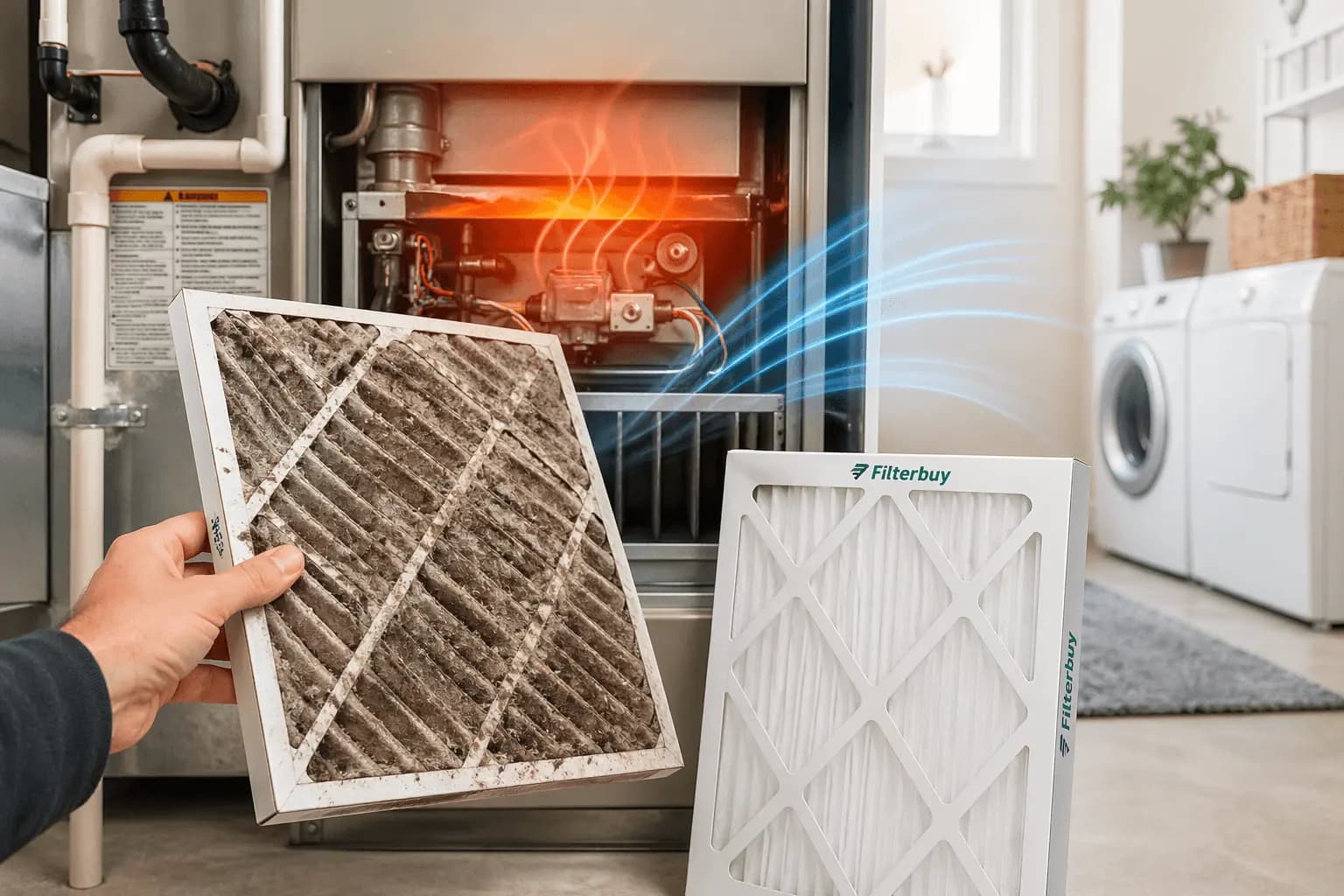
Your furnace ran for thirty seconds and quit. The blower is still spinning somewhere in the basement, the burner is dead, the thermostat is calling for heat again, and the house is losing a degree every few minutes. Nine times out of ten, based on what our support team sees through every winter cold snap, the answer is sitting inside your filter slot.
Furnace overheating from dirty filters is the pattern we're describing. A clogged or wrong-size air filter cuts off the airflow your heat exchanger needs to stay cool. Temperatures climb past the safe threshold. A small safety switch called the high-limit sensor shuts the burner down before anything warps or cracks. The furnace is protecting itself, which is exactly the job it was built to do.
This article covers the symptoms worth recognizing, why a filter causes this more often than every other reason combined, the other furnace overheating causes worth ruling out, and the five-minute version of the fix. If you've been asking why is my furnace overheating tonight, you're probably fifteen minutes away from a warm house again.
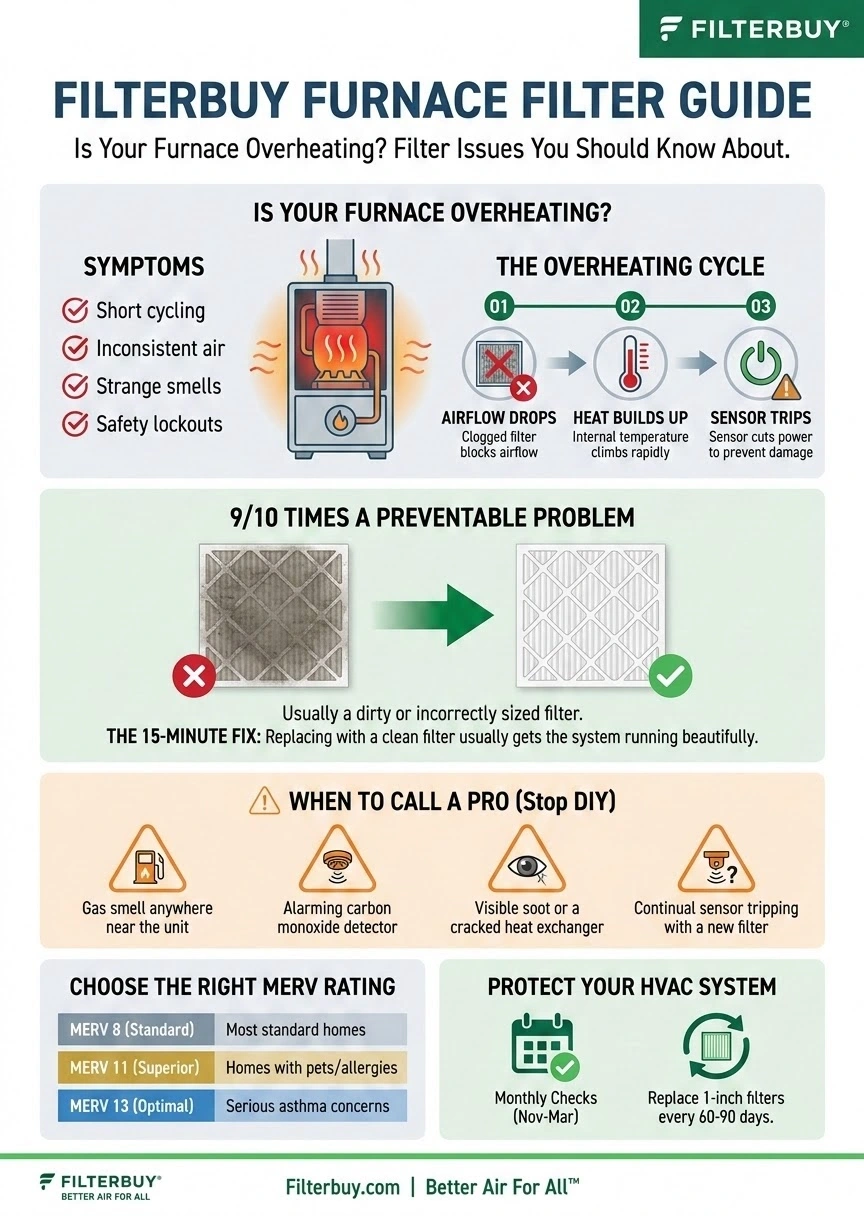
A clogged or wrong-size air filter restricts airflow across your furnace's heat exchanger. Heat builds up past the safe threshold, the high-limit sensor trips, and the burner shuts down to protect the system.
What's happening, step by step:
The filter blocks the airflow the heat exchanger needs to stay cool
Internal temperature climbs past the safe limit
The overheat sensor cuts power to the burner
The blower keeps running until the system cools, then the cycle repeats
From manufacturing filters in the USA for more than a decade, we see this as the single most preventable cause of winter furnace shutdowns we field every January. A clean replacement in the correct size and a MERV 8 to 13 rating usually has the system running again within 15 minutes.
A furnace overheats when something restricts airflow across the heat exchanger. A dirty or wrong-size filter is the usual cause.
The furnace overheat sensor, also called the high-limit switch, is a safety feature working as designed. A tripped sensor points you upstream to the real cause.
Nine times out of ten, replacing the filter with a clean, correctly sized one in MERV 8 to 13 resolves the issue.
A higher MERV rating isn't automatically better. A filter too dense for your system causes the same overheating it's supposed to prevent.
Other furnace overheating causes include closed vents, a dirty blower wheel, leaky ducts, dirty burners, and most seriously, a cracked heat exchanger.
Check your filter monthly from November through March. Replace 1-inch pleated filters every 60 to 90 days in winter, more often with pets or allergies.
Stop DIY and call a pro right away if you smell gas, your CO detector alarms, or the overheat sensor trips with a brand-new correct filter.
Run through this list before you touch anything mechanical. These are the furnace overheating symptoms our support team hears most often at the start of a cold snap:
Short cycling: the burner fires, runs briefly, and shuts off before the house warms up.
Warm air, then cold air, then nothing at all from the supply vents while the blower keeps spinning.
A hot or burning-dust smell drifting out of the registers.
Visible dust collecting on vents and furniture faster than normal.
Repeated safety shutoffs that force a manual reset to get the furnace running again.
Longer run times to hit the same thermostat setting you've used all winter.
A gas or electric bill that jumped without a weather event that explains it.
Any one of these on its own is worth a look. Three or more at the same time, and the heater overheating pattern is almost certainly in play.
A forced-air furnace works on one simple idea: fuel burns, the heat exchanger gets hot, and the blower pushes air across it so heat moves into your ductwork and out into the house. The moment airflow is restricted, the whole system starts to fail in slow motion. For a neutral overview of how the appliance itself is built, the Wikipedia entry on the central heating furnace covers the basics.
Here's the chain of events when the filter is the problem:
The filter clogs, or a too-high MERV rating creates too much static pressure, and less air can pass through.
The blower keeps trying to move air across the heat exchanger, but the volume drops below what the system was designed for.
The heat exchanger can't shed its heat fast enough. Internal temperature climbs.
The furnace overheat sensor, or high-limit switch, catches the unsafe temperature and cuts the burner.
The blower runs on until the system cools, the thermostat calls for heat again, and the cycle starts over.
That on-off-on-off pattern is short cycling, and it's one of the hardest things a furnace goes through. If short cycling keeps happening after you swap the filter, our guide on why your HVAC system short-cycles in winter covers the causes a filter change won't fix.
The furnace overheat sensor rarely fails, and it's not what's wrong with your furnace tonight. It's a small switch mounted near the heat exchanger that watches the plenum temperature. Once that temperature climbs past a preset safe limit, the switch opens and cuts power to the burner. That's exactly the behavior you want from it. A tripped switch is the furnace telling you something upstream is wrong, and the culprit is almost always airflow. Usually the filter. Replace the filter, give the system 15 minutes to cool, and the switch normally resets on its own.
Filterbuy sells filters, and we'd rather be straight with you than sell you one you don't need: not every furnace overheating event traces back to a filter. Before you spend on a new one, rule these out:
Closed or blocked supply vents. A couch pushed against a register or too many rooms closed off raises static pressure across the whole system, and the effect on the furnace looks identical to a clogged filter.
A dirty blower wheel or failing blower motor. If the fan is moving less air than it used to, the heat exchanger overheats even behind a brand-new filter.
Undersized or leaky return ducts. If the ductwork can't deliver enough return air, the bottleneck is the duct, not the filter.
A dirty flame sensor or burners. These cause incorrect combustion, rough cycling, and on some systems a false overheat trip. Most HVAC techs clean these during a standard tune-up.
A cracked heat exchanger. Rare, serious, and never DIY. This is a carbon monoxide risk. Stop using the furnace and call a licensed HVAC pro the same day.
Five steps, in order. Work through them before calling anyone.
Turn the thermostat to OFF. Let the system cool for at least 15 minutes before you touch the furnace or open the filter door.
Pull the filter and hold it up to a light. If you can't see light through it, you've got your answer. Write the size down off the frame before you throw the old one away.
Walk the house. Open every supply vent that's closed, and move furniture, rugs, and curtains back at least 18 inches from any register or return grille.
Install a clean replacement filter in the correct size and a MERV rating your system can handle. MERV 8 through MERV 13 covers almost every residential furnace. Make sure the airflow arrow on the frame points toward the blower.
Turn the thermostat back on and watch the system complete one full heating cycle. If it runs to temperature without shutting off, the filter was the fix. If it trips again, the cause is past the filter slot and it's time to call a pro.
Turn the furnace off, leave the house, and call for help right away if any of the following apply:
A gas smell anywhere near the furnace. Leave first, then call your gas utility from outside the house.
A carbon monoxide detector alarming. Leave immediately and call 911.
Soot, scorch marks, or a visibly cracked heat exchanger.
The overheat sensor still tripping with a brand-new correct-size clean filter installed.
The blower motor silent when the thermostat calls for heat.
These are signs the problem has moved past a filter, and past anything you should be fixing yourself.
The same habit that prevents furnace overheating from dirty filters also lowers your heating bill and extends the life of your system. Three things move the needle more than anything else:
Check your filter monthly from November through March. Your furnace works far harder in peak heating season than in the shoulder months, so a filter rated for 90 days of spring use can be saturated inside 45 days of January use.
Book a pre-season HVAC inspection. Most contractors catch issues like blower wear, duct leaks, or flame sensor buildup long before any of them trigger a mid-winter overheat.
Keep at least 75% of your supply vents open. Closing off half the house to save money does the opposite: static pressure climbs, and the system hits the same restriction a clogged filter creates.
Most filter guides push the same line: higher MERV is always better. That's only true if your furnace can push air through the denser filter media. A MERV 16 filter dropped into a system engineered for MERV 11 causes the exact overheating problem that brought you to this page.
Based on the millions of filters we've shipped and the patterns our support team tracks in winter, here's the honest version:
MERV 8 (Standard) is the right fit for most homes without pets or allergy concerns.
MERV 11 (Superior) is the sweet spot for homes with pets, mild allergies, or wildfire-smoke-prone regions.
MERV 13 (Optimal) is for households with serious allergy or asthma concerns, but only on systems rated to handle the airflow restriction.
If you're unsure whether your system can handle a higher rating, stay at MERV 8 or 11. A properly flowing lower-rated filter always outperforms a restrictive higher-rated one.
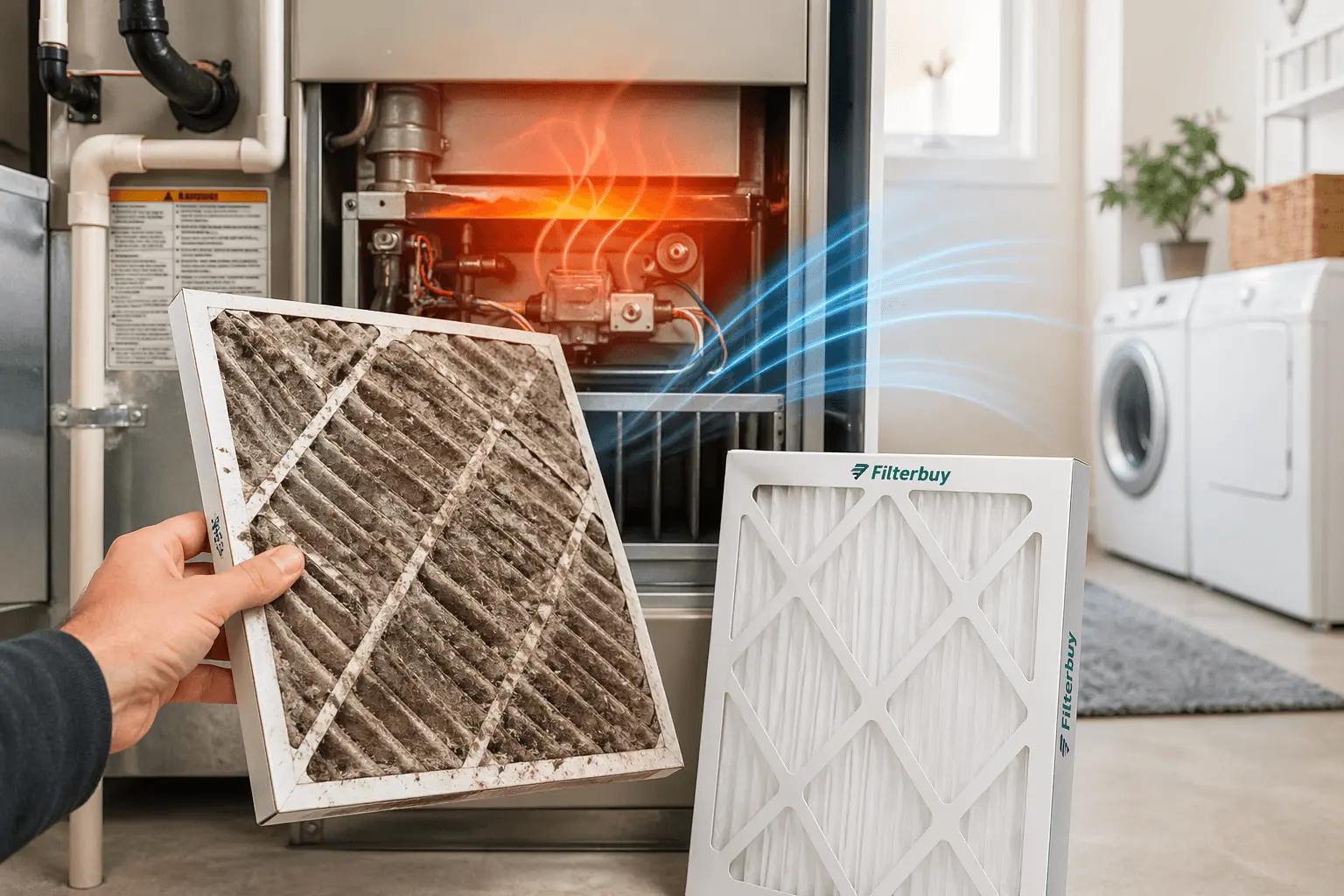
"After manufacturing air filters in the USA for more than a decade and shipping millions of them into homes across every climate zone, we can tell you the same thing we tell every homeowner who calls us mid-January: nine times out of ten, a furnace that keeps shutting itself off isn't broken, it's choking on a filter that should have been replaced six weeks ago."
— Filterbuy HVAC Content Team
U.S. Department of Energy, Air Conditioner Maintenance
https://www.energy.gov/energysaver/air-conditioner-maintenance
The plain-English federal guide to why filter maintenance is the first line of defense for HVAC efficiency. If you read one thing about airflow and filters, read this.
ENERGY STAR, Heat and Cool Efficiently
https://www.energystar.gov/saveathome/heating-cooling
ENERGY STAR's household-level HVAC efficiency guide. Directly recommends checking your filter monthly in heavy-use seasons and replacing it at least every three months to prevent the exact airflow restriction that causes overheating.
ENERGY STAR, HVAC Maintenance Checklist
https://www.energystar.gov/saveathome/heating-cooling/maintenance-checklist
Print this one. It's the clearest seasonal HVAC checklist we've seen, and it covers the pre-season inspection items that would catch most overheat events before they ever happen.
U.S. EPA, The Inside Story Guide to Indoor Air Quality
https://www.epa.gov/indoor-air-quality-iaq/inside-story-guide-indoor-air-quality
The EPA's homeowner primer on indoor air quality, including the finding that indoor pollutant concentrations often run much higher than outdoor levels. Explains why a filter doing its job matters for more than your furnace.
CDC, Carbon Monoxide Furnace Safety Fact Sheet
https://www.cdc.gov/carbon-monoxide/factsheets/furnace-safety-fact-sheet.html
The CDC's homeowner-facing fact sheet on carbon monoxide risk from gas and oil furnaces. Read it now, not after something goes wrong. CO is odorless, which is why working detectors and annual inspections matter.
U.S. Consumer Product Safety Commission Carbon Monoxide Fact Sheet
https://www.cpsc.gov/safety-education/safety-guides/carbon-monoxide/carbon-monoxide-fact-sheet
CPSC's companion resource on CO sources inside the home, including current fatality figures from malfunctioning fuel-burning appliances. A furnace that keeps overheating earns professional attention on gas and oil systems.
Filterbuy, HVAC System Short Cycles in Winter
Our deeper breakdown of every cause behind winter short cycling, the symptom most often paired with furnace overheating. Read this one next if a new filter didn't fix your system.
Each figure below cites its original source. Dates and numbers reflect what the source stated at the time of publishing.
A Clean Filter Can Cut HVAC Energy Use
The U.S. Department of Energy reports that swapping a clogged filter for a clean one can reduce a home HVAC system's energy use by 5 to 15 percent. That isn't a rounding error. On a $2,000 annual energy bill, that's $100 to $300 back in your household and one of the biggest preventable causes of overheating taken off the table.
Source: U.S. Department of Energy, Air Conditioner Maintenance. https://www.energy.gov/energysaver/air-conditioner-maintenance
Indoor Pollutant Levels Often Run Higher Than Outdoor Levels
EPA's Total Exposure Assessment Methodology studies found that common organic pollutants inside homes run roughly two to five times higher than outdoor levels, regardless of whether the home is urban, suburban, or rural. A properly sized, properly flowing filter is your first line of defense against that concentrated indoor load. A clogged one produces the opposite effect.
Source: U.S. EPA, The Inside Story Guide to Indoor Air Quality. https://www.epa.gov/indoor-air-quality-iaq/inside-story-guide-indoor-air-quality
Carbon Monoxide Fatalities from Non-Automotive Consumer Products
According to the U.S. Consumer Product Safety Commission, malfunctioning fuel-burning appliances (furnaces, water heaters, room heaters, and similar products) are a leading source of non-automotive carbon monoxide fatalities in U.S. homes each year. A furnace that keeps overheating is more than a comfort and repair issue. On gas and oil systems, it's the kind of event that calls for working CO detectors and a professional inspection if a clean filter doesn't resolve it.
Source: U.S. Consumer Product Safety Commission, Carbon Monoxide Fact Sheet. https://www.cpsc.gov/safety-education/safety-guides/carbon-monoxide/carbon-monoxide-fact-sheet
One takeaway from this page: a furnace that shuts itself off in the middle of a cold snap is almost always a furnace protecting itself, not a broken one. The frustrating part is that the fix tends to be boring. A new $15 filter, in a size you probably already own, solves most of these calls.
Our take, after more than a decade of building filters in the USA and listening to the same winter problem repeat across every climate zone: the air filter industry has done a good job convincing people that a higher MERV rating is always better. That isn't accurate. The best filter for your furnace is the one with the right size, the right MERV rating for what your system was engineered to handle, and a replacement cycle that matches how your home actually runs the furnace. A 1-inch pleated filter in peak heating season usually needs replacing every 60 to 90 days, with a monthly visual check. Homes with pets, allergies, or seasonal wildfire smoke often run closer to every 30 to 45 days.
What most competitor articles won't say: if a clean, correctly sized filter doesn't fix your furnace, the problem has moved past the filter slot. Repeated short cycling, an overheat sensor that keeps retripping, strange smells, soot, or a silent blower motor are all reasons to stop DIYing and pick up the phone. One HVAC service call is almost always cheaper than one month of a furnace fighting itself.
Whatever condition your furnace is in right now, here's what we'd tell a neighbor standing in front of a thermostat that keeps blinking on and off:
Confirm the symptoms. Walk back through the furnace overheating symptoms list above and note which ones match your system.
Pull and inspect the filter. Hold it up to a light. Write the size down before you toss it. This is the 30-second diagnosis that solves the majority of calls.
Open everything. Every supply vent, return grille, and register in the house. Give the furnace the airflow it was designed to handle.
Replace with the right filter. Correct size, appropriate MERV rating for your system. Insert with the airflow arrow on the frame pointing toward the blower.
Watch one full heating cycle. If the furnace completes it without tripping, you're done. The next project is making sure this doesn't sneak up on you again next winter.
Set up a change schedule. Either a calendar reminder every 60 days or an auto-delivery subscription so the next filter arrives before you need it.
If none of the above works, book a professional inspection. Don't keep resetting the furnace and hoping.
Yes. In our experience it's the most common preventable cause of a winter furnace shutdown. A clogged filter restricts airflow across the heat exchanger. Heat builds up faster than the system can move it into your ductwork, the high-limit sensor catches the unsafe temperature, and the burner cuts out to protect the rest of the system. The furnace is working exactly the way its engineers designed it to.
A tripped sensor is normal, and it resets on its own once the furnace cools. A failing sensor keeps tripping even after you've replaced the filter with a clean, correctly sized one and opened every supply vent in the house. If your furnace short-cycles or locks out behind a brand-new filter, the sensor or another mechanical issue needs professional diagnosis rather than another reset.
Not for long. Even a few hours of unfiltered operation pulls dust, pet dander, and debris straight into the blower, heat exchanger, and ductwork. That damage costs far more to fix than the filter you were trying to avoid buying. If you're waiting on a replacement, keep the furnace off. Filterbuy ships most standard sizes fast and free.
For a standard 1-inch pleated filter during peak heating season, plan on every 60 to 90 days, and check it visually every month. Homes with pets, allergies, or high dust levels should expect closer to every 30 to 45 days. Your furnace runs far more hours in winter than in the shoulder seasons, which is why the filter clogs faster than the packaging date suggests.
Yes. A filter that's too small leaves gaps where unfiltered air bypasses the system, letting debris into the blower and heat exchanger. A filter with a MERV rating too high for your system creates excess static pressure, which produces the same airflow restriction and overheating this article covers. Match the filter to your system's specs, and if you're not sure, our team can help you find the right fit.
Heating season and cooling season put different loads on the same filter. In winter, your furnace runs longer hours, cycles more often, and moves more air through the filter every day than it did in milder weather. A filter that was fine in October can be fully saturated by January. If your heater is overheating but your AC ran fine last summer, the filter is almost always why.
A clean, correctly sized filter is the cheapest furnace protection in your house — find your size at filterbuy.com and we'll ship it fast and free, factory-direct. Set up auto-delivery while you're there, and the next filter arrives before this problem can sneak up on you again.

